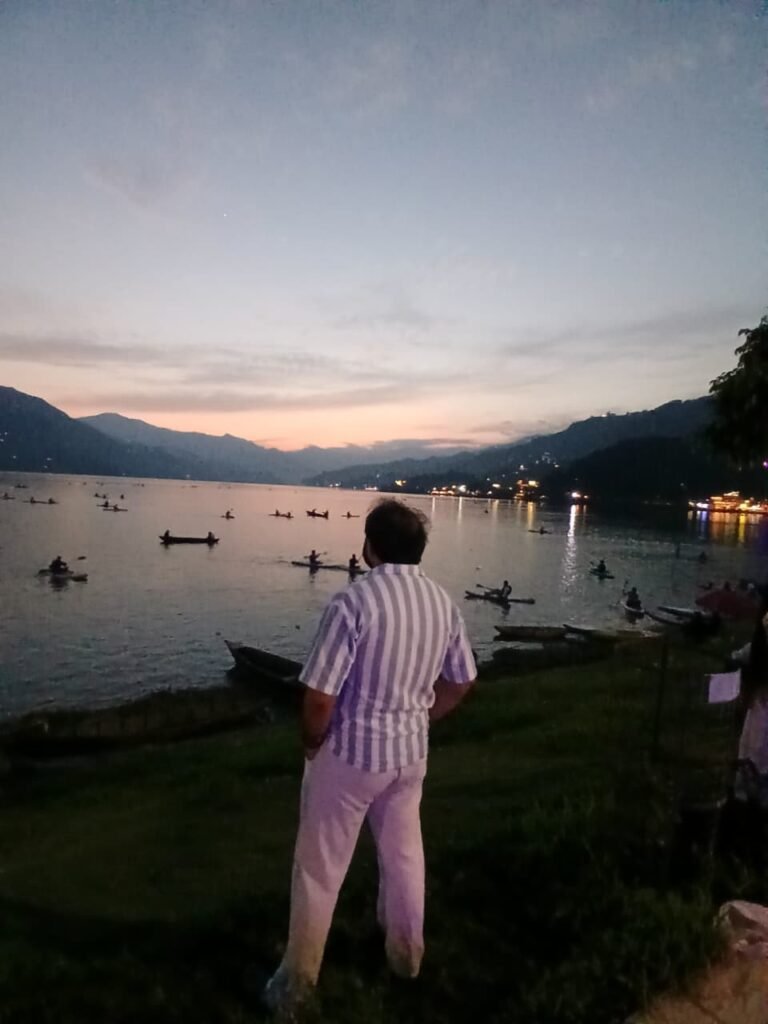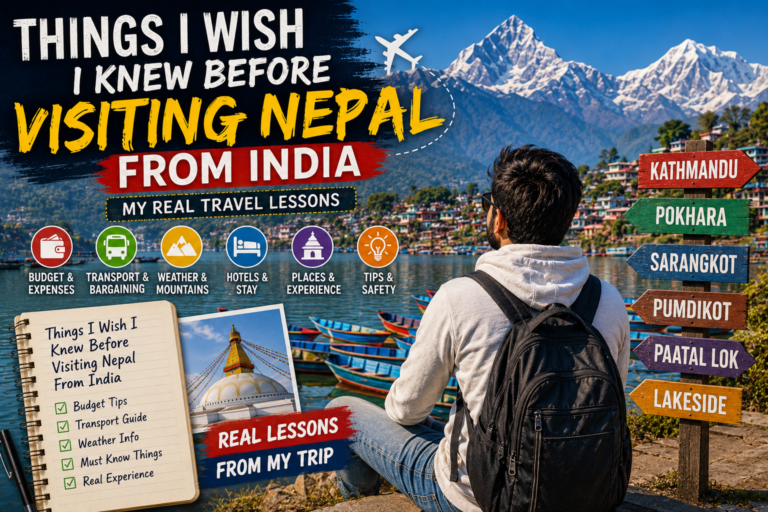
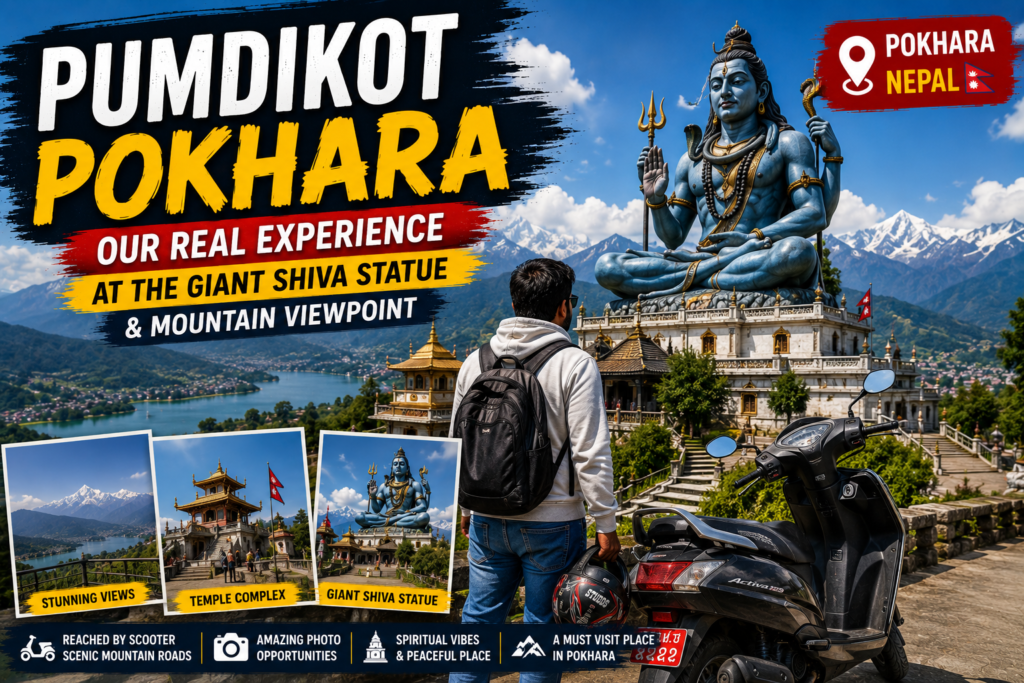
If you’re visiting Pokhara and want to experience something beyond Phewa Lake and Lakeside, Pumdikot is one place I’d definitely keep on the list.
For us, Pumdikot wasn’t just another sightseeing stop.
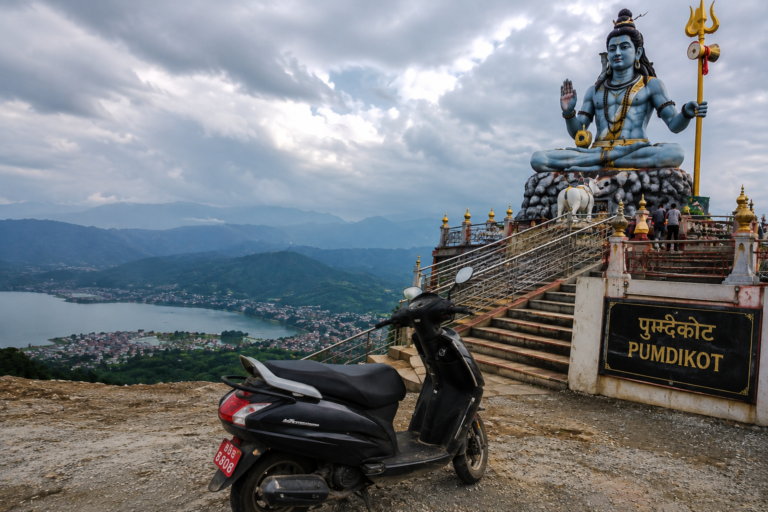
We reached there on our scooter, travelled through the mountain roads and spent time exploring the temple area, the huge Shiva statue and the surrounding viewpoint.
What made the visit memorable was the combination of religion, architecture, mountain scenery and the journey itself.
We weren’t simply dropped at a tourist attraction, took a photograph and left.
We actually travelled there ourselves, explored the surroundings and spent time taking in the views.
So this is my real experience of visiting Pumdikot in Pokhara—what we saw, how we reached there, what I liked, what could have been better and whether I think it’s worth adding to a Nepal itinerary.
Pumdikot at a Glance
| Experience | Our Experience |
|---|---|
| Destination | Pumdikot, Pokhara |
| Main attraction | Giant Shiva statue |
| How we reached | Scooter |
| Type of place | Religious + viewpoint |
| Mountain scenery | Excellent |
| Photography | Excellent |
| Adventure level | Moderate |
| Spiritual atmosphere | Strong |
| Time needed | Depends on how much you explore |
| Best part for us | Shiva statue + mountain surroundings + scooter ride |
| Overall rating | ⭐⭐⭐⭐½ / 5 |
This is my personal rating based on our visit, not an official rating of Pumdikot.
Why We Decided to Visit Pumdikot
When we were exploring Pokhara, we didn’t want to spend all our time around Lakeside.
Phewa Lake and Lakeside were already giving us the relaxed side of Pokhara.
We wanted to see what was beyond the city.
That’s when places like Pumdikot and Sarangkot became part of our exploration.
Since we already had a scooter, visiting Pumdikot was much easier for us.
We could decide when to leave and how long we wanted to stay.
That freedom made the visit feel more like a road trip than a standard sightseeing tour.
The Journey to Pumdikot Was Part of the Experience
One thing I would tell anyone visiting Pumdikot is:
Don’t think only about the destination. Enjoy the journey too.
We travelled there by scooter.
The road itself gave us a different view of Pokhara.
As we moved away from the busier parts of the city, the surroundings became more open and mountainous.
There were hills around us, changing views and plenty of moments where we wanted to stop and look around.
That’s one of the reasons I enjoyed travelling around Pokhara by scooter.
If we’d simply taken a taxi, Pumdikot would still have been beautiful.
But riding there ourselves made the entire journey part of the memory.
Reaching Pumdikot
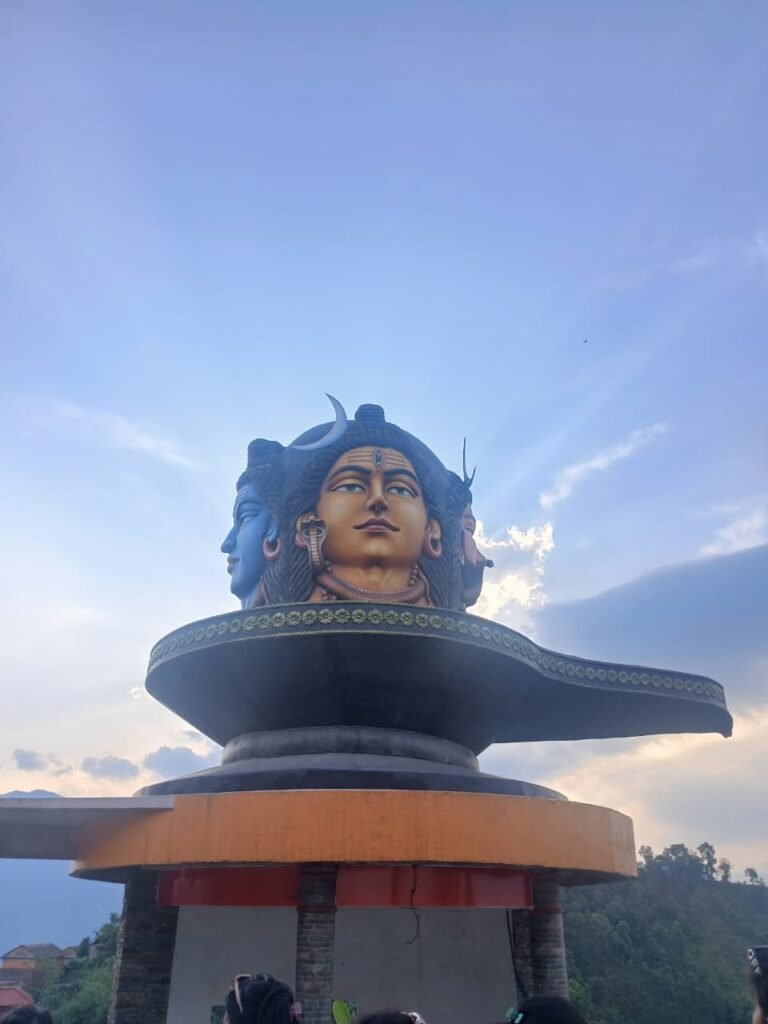
When we finally reached Pumdikot, the first thing that immediately caught our attention was the huge Shiva statue.
It isn’t the kind of statue you casually walk past.
You can see it from a distance, and once you’re closer, its size becomes even more impressive.
The statue gives the entire place a strong visual identity.
For us, it immediately felt like:
“Okay, this is going to be one of those places where we take a lot of photographs.”
And yes, we did.
The Giant Shiva Statue
The Shiva statue was definitely the highlight of our visit.
It dominates the surroundings and creates a dramatic backdrop against the sky and mountains.
The combination of the statue and the natural landscape makes the place particularly photogenic.
We spent time around the area taking photographs from different angles.
Some photographs focused on the statue itself.
Others included the surrounding landscape.
And because we had plenty of open space around us, we could take our time rather than feeling rushed.
Pumdikot Is More Than Just a Statue
Before visiting, I might have assumed Pumdikot was mainly about the giant Shiva statue.
But once we were there, I realized there was more to the experience.
The surrounding temple complex and open areas gave the destination a more complete atmosphere.
It wasn’t simply:
statue → photograph → leave.
There was a religious environment around it.
There were structures to explore.
There were views.
There were places where you could stop and simply look around.
That combination made the visit more interesting.
The Religious Atmosphere
One of the things I liked about Pumdikot was that the place still felt connected to its religious purpose.
The giant Shiva statue was obviously the biggest attraction, but the surrounding temple environment added another layer to the visit.
You could explore the area at your own pace.
For me, that balance between tourism and spirituality worked well.
You can come as a traveller who wants photographs.
You can come as someone interested in religious places.
Or you can simply come to enjoy the mountain scenery.
The destination works for all three.
The Mountain Views Were a Major Bonus
The Shiva statue would have been impressive on its own.
But put it in a mountain setting and the experience becomes much stronger.
From the higher areas around Pumdikot, we could look across the surrounding landscape.
The elevation gives you a different perspective of Pokhara.
You aren’t looking at the city from street level anymore.
You’re seeing the wider landscape.
Mountains.
Hills.
The valley.
And the city below.
That was one of my favourite parts of being there.
The Weather Wasn’t Perfect
Like our other mountain experiences in Nepal, the weather played a role.
We didn’t always get the perfectly clear mountain views that you see in photographs online.
Clouds and visibility can change the experience.
That’s something I learned during this trip.
You can travel to a viewpoint expecting a perfect panoramic scene.
But nature doesn’t work according to your itinerary.
If the weather is clear, fantastic.
If it’s cloudy, you have to enjoy the destination for what it is.
For us, even without perfect visibility, Pumdikot was still worth visiting.
Why Pumdikot Was Good for Photography
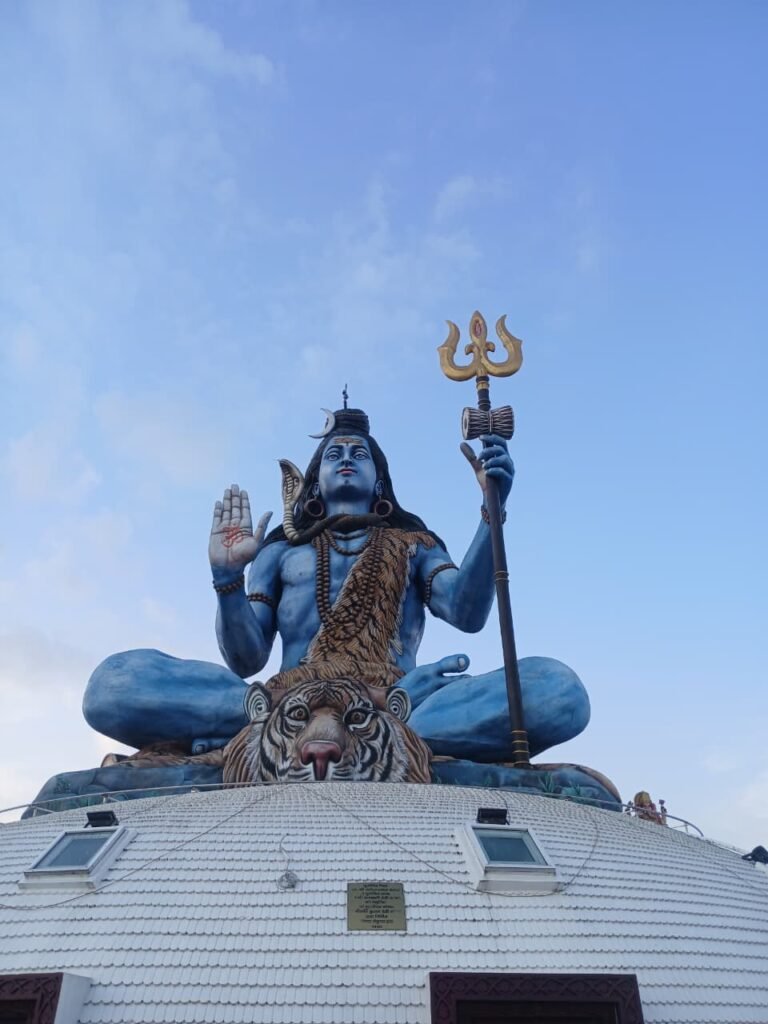
If you enjoy travel photography, Pumdikot gives you plenty of options.
You have the huge Shiva statue.
You have the temple structures.
You have the mountain landscape.
You have open spaces.
And you have different levels from which to frame your photographs.
We spent quite a bit of time taking pictures.
And because we weren’t on a strict tour schedule, we didn’t feel like we had to rush.
That’s another benefit of exploring independently.
Our Scooter Made the Visit Easier
The scooter was particularly useful for this part of the trip.
We didn’t have to arrange a separate vehicle.
We didn’t have to wait for anyone.
We could simply decide when to leave.
And after finishing at Pumdikot, we could continue exploring instead of immediately returning to the hotel.
This was one of the reasons our three days in Pokhara felt so full.
We weren’t treating every destination as an isolated activity.
We were connecting them through our own journey.
Pumdikot Compared With Sarangkot
We also visited Sarangkot during our Pokhara trip, and the two destinations gave us different experiences.
| Feature | Pumdikot | Sarangkot |
|---|---|---|
| Main attraction | Giant Shiva statue & temple | Mountain viewpoint + paragliding |
| Religious atmosphere | ⭐⭐⭐⭐⭐ | ⭐⭐⭐⭐ |
| Mountain views | ⭐⭐⭐⭐½ | ⭐⭐⭐⭐⭐ |
| Adventure | ⭐⭐⭐½ | ⭐⭐⭐⭐⭐ |
| Photography | ⭐⭐⭐⭐⭐ | ⭐⭐⭐⭐⭐ |
| Spiritual experience | ⭐⭐⭐⭐⭐ | ⭐⭐⭐⭐ |
| Road-trip experience | ⭐⭐⭐⭐½ | ⭐⭐⭐⭐⭐ |
| Overall for us | ⭐⭐⭐⭐½ | ⭐⭐⭐⭐⭐ |
I wouldn’t say one replaces the other.
If you have time, I’d visit both.
They give you different perspectives of Pokhara.
Pumdikot vs Phewa Lake
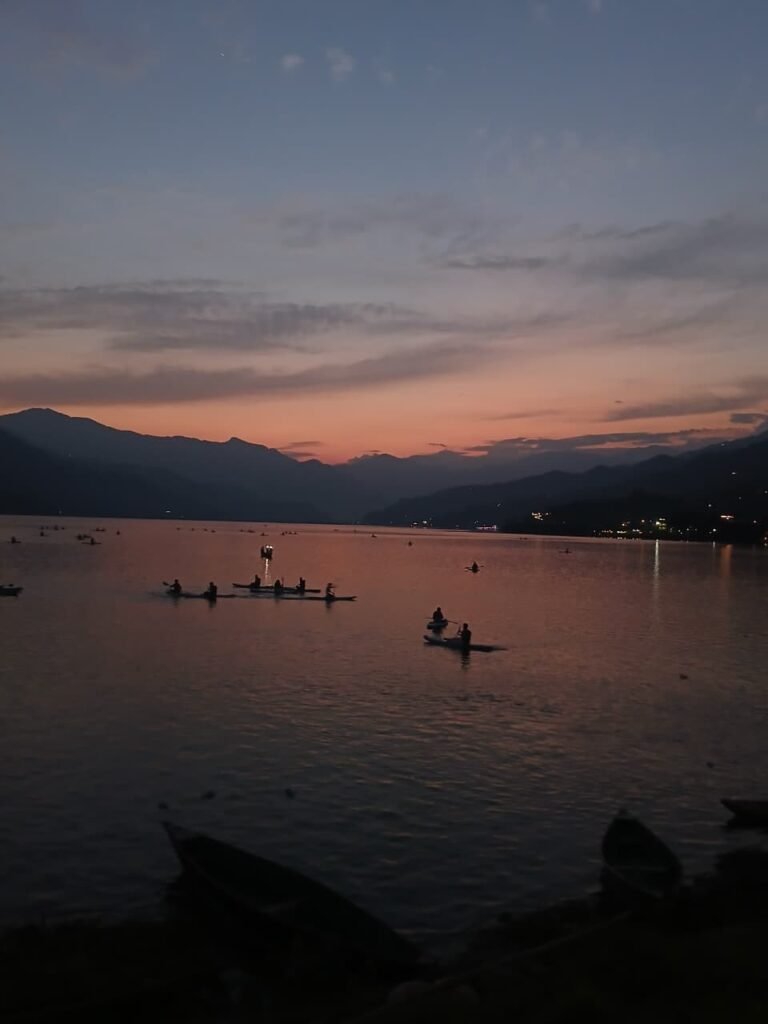
The difference is even bigger when you compare Pumdikot with Phewa Lake.
Phewa Lake was the relaxing part of our Pokhara experience.
We could walk around Lakeside.
Visit cafés.
Enjoy the evening.
Listen to live music.
And simply slow down.
Pumdikot was more about:
Going higher → exploring → taking photographs → seeing the landscape from above.
That’s why I think both belong in a Pokhara itinerary.
How Long Should You Spend at Pumdikot?
Based on our experience, you don’t necessarily need an entire day dedicated only to Pumdikot.
It works well as part of a broader day of exploring around Pokhara.
You can travel there, explore the temple and statue, take photographs, enjoy the views and then continue to another destination.
That’s basically how we approached our sightseeing.
We didn’t want to spend an entire day doing only one thing.
Combine Pumdikot With Other Pokhara Experiences
If you have a scooter or private transport, you can structure your day around multiple destinations.
For example, you could have:
Morning: Mountain-side sightseeing
Afternoon: Pumdikot
Evening: Return towards Lakeside
Night: Cafés, dinner or nightlife
We didn’t follow a rigid version of this itinerary, but the flexibility of our trip allowed us to explore several places in a similar way.
What I Liked Most About Pumdikot
If I had to pick my favourite things about the destination, I’d choose these:
1. The Giant Shiva Statue
It’s the obvious highlight and genuinely impressive.
2. The Mountain Setting
The landscape makes the destination much more visually interesting.
3. The Religious Atmosphere
It doesn’t feel like a purely commercial tourist attraction.
4. The Photography
There are plenty of opportunities for photographs.
5. The Journey
Riding there on the scooter made the entire experience more enjoyable.
What Could Have Been Better?
Since this is my real experience, I also want to mention the things that weren’t perfect.
The biggest factor was the weather.
We would obviously have preferred clearer mountain views.
And when you’re visiting a high viewpoint, visibility can make a huge difference.
Another thing is that if you’re expecting a huge number of activities, Pumdikot isn’t that kind of destination.
Its strength is the combination of the statue, temple environment, scenery and viewpoint.
So don’t arrive expecting an amusement park or a long list of attractions.
Go for the experience.
Is Pumdikot Worth Visiting?
For me, yes.
Especially if you’re already spending several days in Pokhara.
I wouldn’t say you need to travel across Nepal solely to visit Pumdikot.
But if you’re in Pokhara and have time to explore the surrounding areas, I’d definitely consider adding it.
The giant Shiva statue alone makes it visually memorable.
Add the mountain scenery and the journey, and it becomes even better.
Our Pumdikot Experience: Quick Analysis
| Category | My Rating | My Reason |
|---|---|---|
| Statue | ⭐⭐⭐⭐⭐ | Huge and visually impressive |
| Temple atmosphere | ⭐⭐⭐⭐⭐ | Added spiritual character |
| Views | ⭐⭐⭐⭐½ | Beautiful, though weather affected visibility |
| Photography | ⭐⭐⭐⭐⭐ | Plenty of good angles |
| Adventure | ⭐⭐⭐½ | More sightseeing than adventure |
| Scooter journey | ⭐⭐⭐⭐⭐ | Made reaching it more enjoyable |
| Relaxation | ⭐⭐⭐⭐ | Open and peaceful compared with busy areas |
| Crowds | ⭐⭐⭐⭐ | Manageable during our visit |
| Overall value | ⭐⭐⭐⭐½ | Worth adding to a Pokhara trip |
What I Would Do Differently Next Time
If I visit Pumdikot again, I’d try to choose a day with better weather.
I’d also plan enough time to explore the surrounding area rather than treating it as a quick photo stop.
And I’d probably combine it with another nearby experience.
Most importantly, I’d still go by road if possible.
I liked the feeling of travelling there independently.
Our Nepal Trip Budget Context
Our overall Nepal trip expenditure was approximately ₹35,000–₹40,000.
I haven’t assigned a separate invented cost to Pumdikot because we didn’t keep an exact individual expense record for this destination.
That’s important to mention because I want these articles to remain based on what we actually experienced, rather than adding made-up numbers.
Our scooter rental during the trip was around ₹800 for the day, and that scooter allowed us to explore places such as Pumdikot and Sarangkot more freely.
Final Thoughts
Pumdikot became one of the places I remember clearly from our Nepal trip.
Not because we spent an entire day there.
Not because it had dozens of attractions.
But because of the combination of everything.
We rode there on a scooter.
We travelled through the mountain roads.
We reached the higher area.
Then suddenly, there was this enormous Shiva statue in front of us.
Around it were temple structures, open spaces and mountain scenery.
We took photographs.
We explored.
We looked at the landscape.
And then we continued our journey.
That’s what I liked about Pumdikot.
It wasn’t just a statue. It was a destination where religion, architecture, mountain scenery and the journey came together.
If you’re planning a Pokhara trip and already have Phewa Lake, Lakeside and Sarangkot on your list, I’d seriously consider adding Pumdikot as well.
You don’t need to make it an entire-day excursion.
Just give it enough time to actually experience the place.
Because for me, the best part wasn’t simply saying:
“I visited Pumdikot.”
It was remembering how we got there, what we saw when we arrived and the feeling of standing high above Pokhara with the mountains around us.
And that’s exactly the kind of destination that stays in your travel memories.
Also see related article Exploring Pokhara by Scooter: Our Real Mountain Road Experience in Nepal, Our Hotel Experience in Nepal: Real Stay, Room Problems, Views, Prices & What I Learned, Our Nepal Trip From India: A Real Travel Story, From the Journey to the People We Met, Sarangkot Pokhara by Scooter: My Real Experience, Mountain Roads, Views & Paragliding, Paatal Lok Nepal Travel Experience (2026): My Adventurous Cave & Waterfall Experience