If I had to travel to Nepal again, I would definitely do some things differently.
Not because our trip was bad—in fact, it was one of the most memorable trips I’ve taken—but because you learn the most after you’ve actually travelled somewhere.
Before our Nepal trip, we had a general idea of where we wanted to go. We knew we wanted to explore Kathmandu and Pokhara, see the mountains, visit some interesting places and experience the local atmosphere.
But once we were actually there, we discovered things that we simply couldn’t have understood beforehand.
We learned that bargaining can matter.
We learned that mountain weather can completely change your plans.
We learned that having a scooter in Pokhara gives you a lot of freedom.
We learned that a place that looks simple on a map can become a completely different experience once you are actually there.
And, perhaps most importantly, we learned that real travel is very different from planning a trip on paper.
So, based completely on our experience, these are the things I wish I had known before visiting Nepal from India.
My Quick Analysis: What I Would Prepare Better Next Time
| Travel Factor | Our Experience | What I Would Do Next Time |
|---|---|---|
| Planning | Mostly flexible | Keep flexibility but plan the important parts |
| Hotels | Mostly good, but one booking issue | Confirm reservations before arrival |
| Transport | Sometimes required negotiation | Check prices and options beforehand |
| Scooter | One of our best decisions | Rent again for exploring Pokhara |
| Weather | Changed some mountain plans | Keep backup plans |
| Paatal Lok | Very crowded and narrow | Visit at a less crowded time |
| Shopping | Good local markets | Keep dedicated shopping time |
| Lakeside | Relaxed and enjoyable | Spend even more time there |
| Mountain viewpoints | Beautiful but weather-dependent | Choose clearer-weather days |
| Budget | Around ₹35,000–₹40,000 overall | Keep an emergency buffer |
| Local people | Very helpful in many situations | Continue asking locals for practical advice |
| Overall | Excellent experience | Return with slightly better preparation |
These are my personal observations from our trip, not universal rules for every traveller.
1. Don’t Plan Every Hour of Your Nepal Trip
This is probably the biggest lesson I learned.
Before travelling, it’s tempting to make a huge itinerary.
Wake up at this time.
Visit this place.
Have lunch here.
Leave at this time.
Reach another attraction.
Take photographs.
Go somewhere else.
But our Nepal experience taught me that this isn’t always necessary.
Some of our best experiences happened because we didn’t have everything planned.
We could talk to people.
We could change our plans.
We could spend longer somewhere we liked.
And if the weather wasn’t good, we could adjust.
2. Keep a Basic Plan, But Leave Space for the Unexpected
I’m not saying you should arrive in Nepal without knowing anything.
That’s not what I would do either.
I would still decide:
- Which cities we want to visit
- Where we’re staying
- How we’re getting between major destinations
- Roughly how many days we have
- How much money we want to spend
But after that, I’d leave some empty space.
That flexibility is especially useful in places like Pokhara.
We ended up exploring more than we initially expected because we had the freedom to change our plans.
3. Pokhara Deserves Time
If there is one place where I’d tell myself “don’t rush”, it’s Pokhara.
We spent around three days there and explored several different sides of the city.
There was Phewa Lake.
There was Lakeside.
There were cafés.
There was nightlife.
There were mountain roads.
There was Sarangkot.
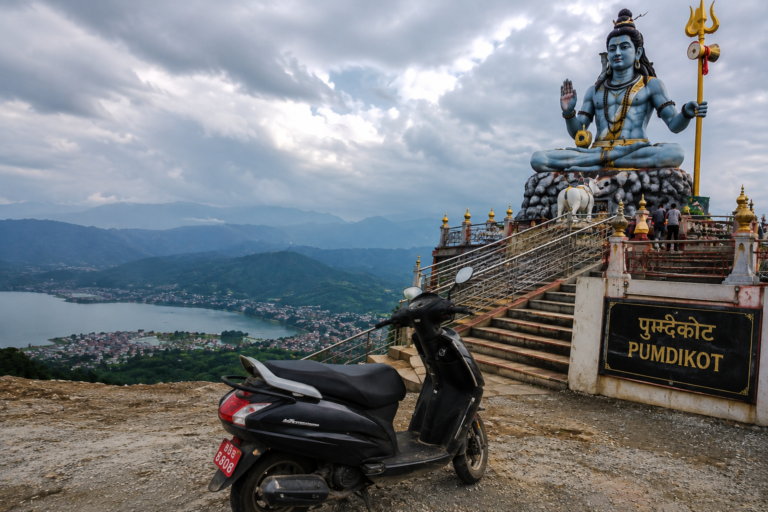
There was Pumdikot.
And there was Paatal Lok.
The city gave us such a mixture of experiences that rushing through it would have taken away from the trip.
Lakeside Is More Than Just a Place to Stay
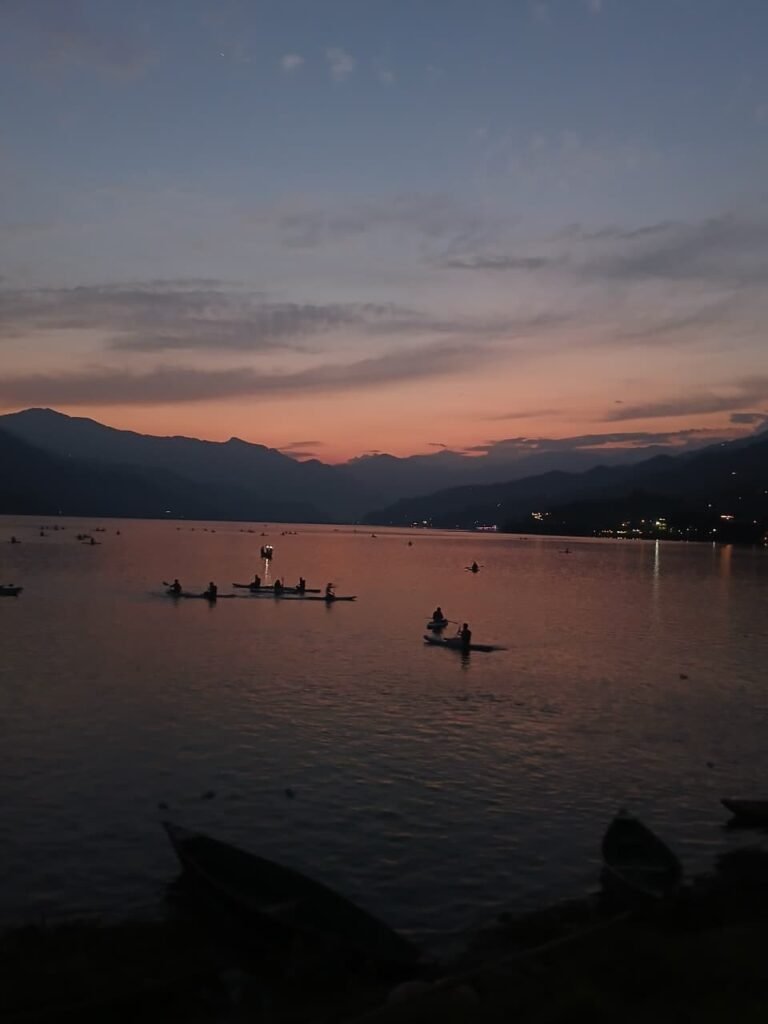
Our experience around Pokhara Lakeside was one of the more relaxed parts of the trip.
During the day, you can explore around the lake and surrounding streets.
In the evening, the atmosphere changes.
There are cafés.
There is live music.
There are people walking around.
And later at night, there is nightlife.
We also experienced a club and ended up having food afterwards.
At one point, we were simply looking for something to eat late at night and ended up having momos and a cold drink.
Nothing fancy.
But after being out for hours, that simple meal felt perfect.
4. Rent a Scooter If You Want Freedom Around Pokhara
One of the best decisions we made was renting a scooter.
We paid around ₹800 for the day during our experience.
Having our own scooter meant we didn’t have to depend completely on taxis or fixed transport.
We could simply get on and go.
That’s how we explored places like Sarangkot and Pumdikot.
The mountain roads themselves became part of the experience.
But Don’t Treat Mountain Roads Like City Roads
This is something I would definitely keep in mind next time.
A scooter gives you freedom, but mountain roads require attention.
There are climbs.
There are turns.
There are changing road conditions.
And then there’s the weather.
We had to ride carefully and take our time.
The scenery can make you want to stop every few minutes, but you still have to focus on the road.
The journey is beautiful, but it isn’t something to take casually.
5. Check the Weather Before Going to Mountain Viewpoints
This is another big lesson.
We wanted to see the mountains clearly.
But the weather didn’t always cooperate.
At times, clouds came in and visibility became poor.
That affected our plans and meant we couldn’t explore some areas as much as we wanted.
If I were doing the trip again, I’d pay more attention to the weather before choosing the day for mountain viewpoints.
You can still visit when the weather isn’t perfect, but if your main reason for going somewhere is the view, clear weather makes a huge difference.
6. Sarangkot Is About the Journey Too
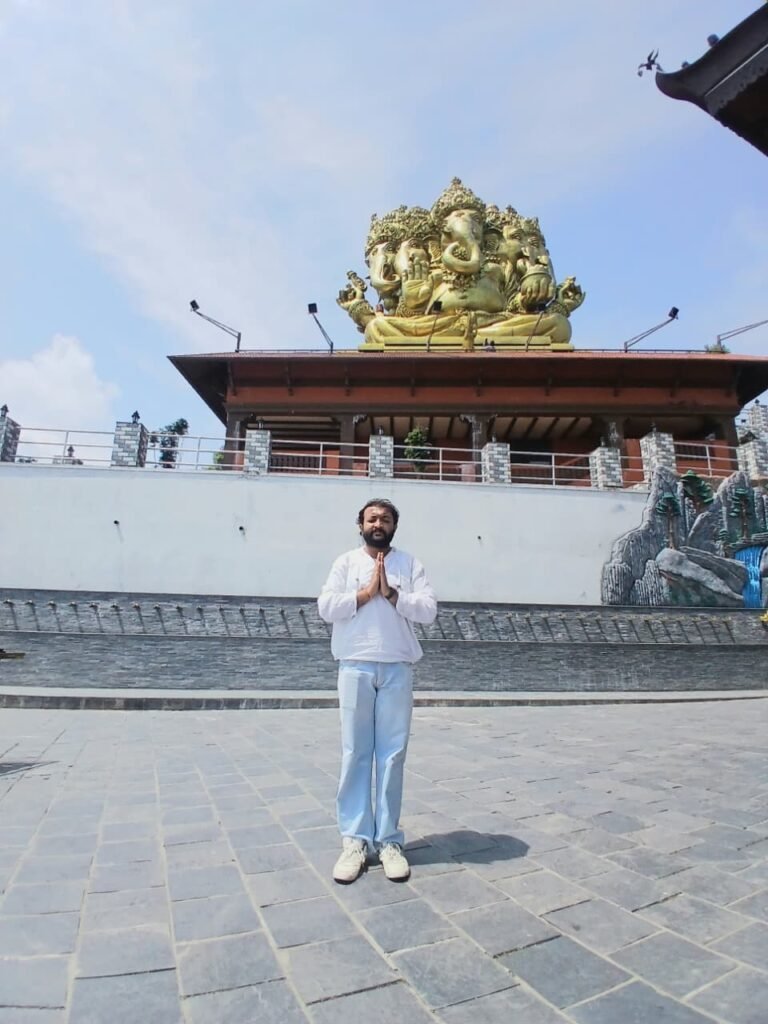
Our Sarangkot experience wasn’t only about reaching the viewpoint.
We travelled there by scooter.
The roads climbed through the hills.
The views gradually changed.
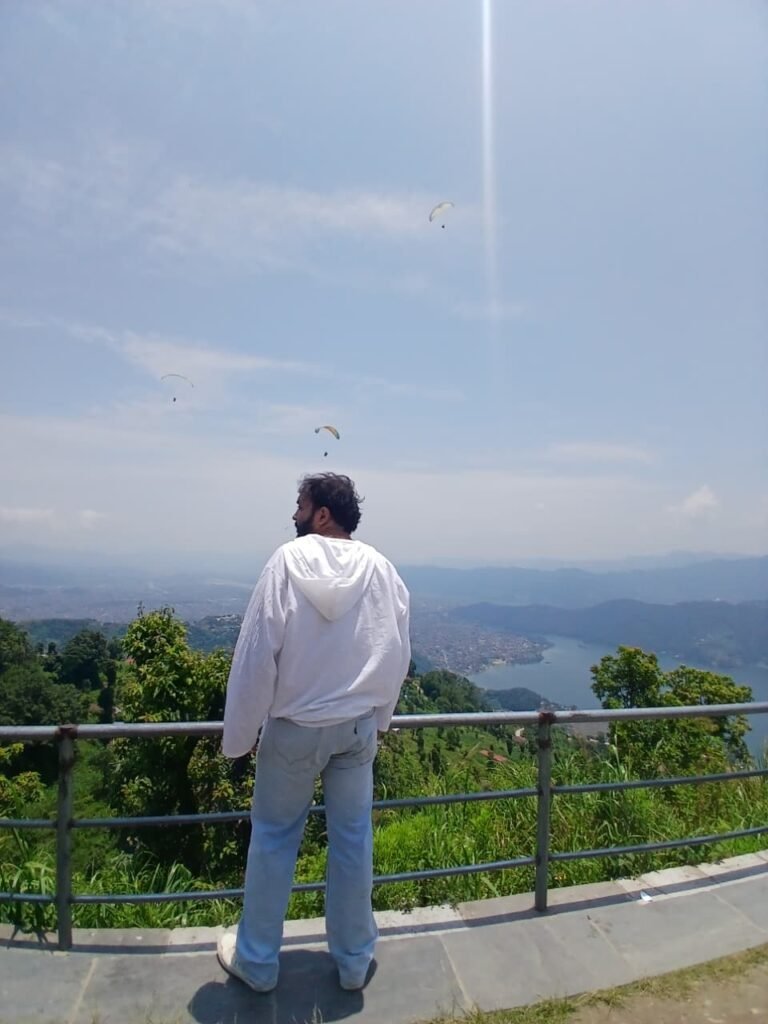
And when we reached the higher areas, we could look down towards Pokhara.
We also saw people paragliding.
We didn’t try paragliding ourselves, but watching people flying over the valley was still an exciting part of the experience.
We also explored a temple area and climbed some stairs.
So if you’re visiting Sarangkot, don’t think of it only as:
“Reach viewpoint → take photo → leave.”
Enjoy the ride and the surrounding area too.
7. Pumdikot Is Another Place Where the Journey Matters
Pumdikot gave us a similar experience.
We travelled there by scooter and eventually reached the area with the huge Shiva statue.
The statue was impressive, but what stayed with me was the combination of the statue, the mountain landscape and the journey there.
We explored around the area, took photographs and spent some time enjoying the surroundings.
Again, the weather affected visibility.
So I’d recommend keeping enough time rather than trying to squeeze Pumdikot into a very tight schedule.
8. Don’t Underestimate Paatal Lok
If someone had told me before the trip exactly what Paatal Lok would feel like, I probably would have prepared differently.
The entrance ticket was around ₹100 per person during our visit.
At first, everything seemed interesting.
We went down the spiral staircase.
The stairs gave us the feeling that we were travelling deeper underground.
Then the cave passages started.
And they became extremely narrow.
I’m 5’10” and Had to Bend Down
This is one detail I definitely remember.
I’m around 5’10”, and in some sections the ceiling was so low that I had to bend down to walk.
There were also huge crowds.
Some sections were wide enough for only one person.
In other places, two people could pass only by moving carefully to the side.
Water was dripping from the ceiling.
Because of the crowd, we were sweating.
Because of the dripping water, we were also getting wet.
It was uncomfortable.
But at the same time, it was genuinely adventurous.
9. Crowds Can Change the Experience
The biggest challenge inside Paatal Lok wasn’t just the cave itself.
It was the number of people.
I remember thinking:
“If something happens here, how are we all going to get out?”
There was a little fear because the passages were narrow and movement wasn’t easy.
If I went again, I’d try to visit at a less crowded time if possible.
The cave itself is interesting enough without having to squeeze through it with a huge crowd.
10. Don’t Expect Perfect Weather in the Mountains
This deserves repeating.
Mountain weather can change quickly.
During our trip, there were places we wanted to explore further but couldn’t because the weather wasn’t good.
Initially, that was disappointing.
But eventually, we accepted it.
That’s another lesson:
Don’t build your entire trip around one perfect photograph.
If the mountains are hidden behind clouds, find something else to enjoy.
We did exactly that.
11. Bargaining Is Part of Independent Travel
If you’re travelling independently, especially when arranging local transport, be prepared to negotiate.
We noticed that prices could vary depending on the distance and situation.
So our approach became simple:
Ask the price.
Understand what is included.
Negotiate politely.
Then decide.
You don’t need to argue over every small amount.
But accepting the first price automatically isn’t always the best approach either.
12. Ask Locals When You’re Confused
This is something I’d absolutely repeat.
We asked people for directions and practical information many times during the trip.
And people helped us.
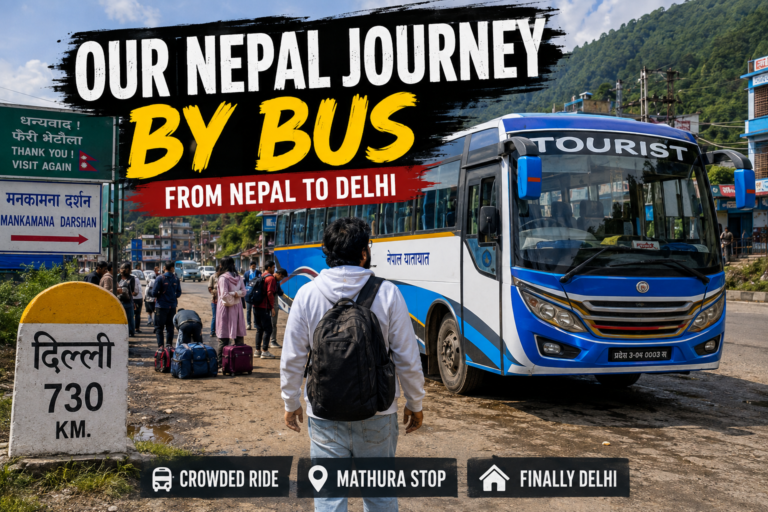
Even during our bus journey back towards Delhi, we spoke with people around us and took their help in understanding the route.
When you’re travelling somewhere unfamiliar, asking someone nearby can save you a lot of confusion.
Google Maps is useful.
But a local person who actually knows the road can sometimes be even more useful.
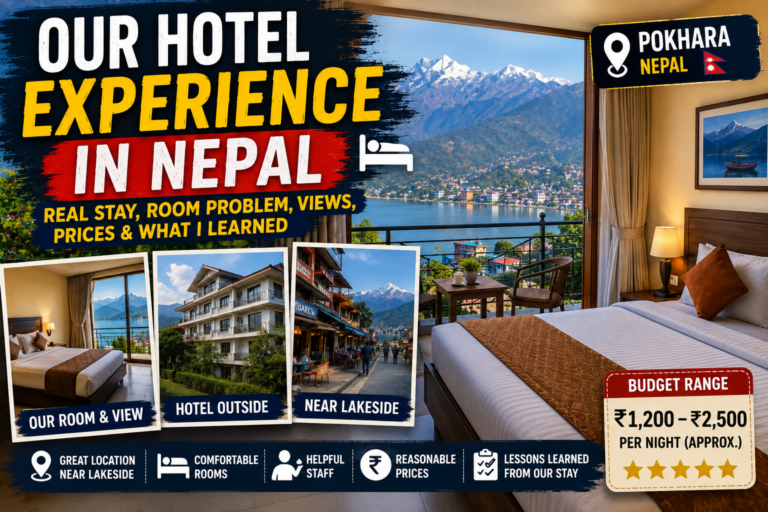
13. Confirm Your Hotel Booking
We had one situation where our hotel booking didn’t go exactly as expected.
We had booked a particular room online, including wanting a room with a view.
But when we arrived, the room wasn’t available because of a booking issue.
Fortunately, the hotel owner helped us arrange another room nearby.
So everything worked out.
Still, if I were doing the trip again, I’d confirm important hotel bookings before arriving.
Especially if the room type or view matters to you.
14. Don’t Forget to Budget for Small Expenses
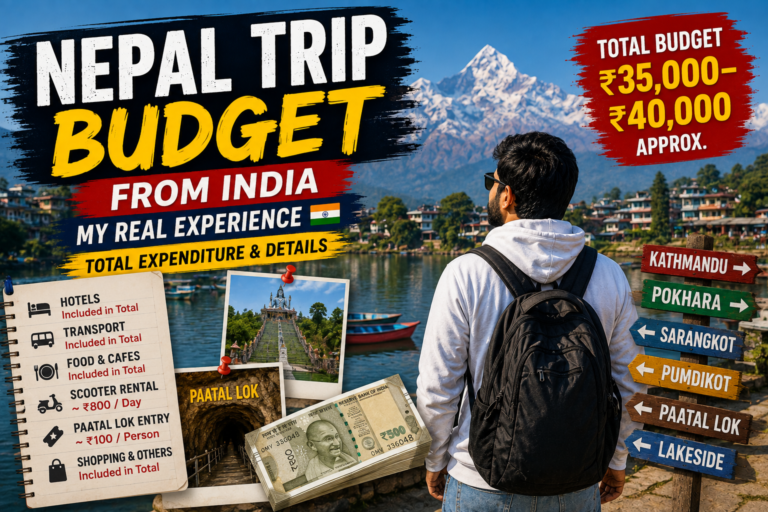
Our overall trip cost came to approximately:
₹35,000–₹40,000
But I learned that small expenses can easily add up.
Food.
Transport.
Short rides.
Snacks.
Shopping.
Entry tickets.
Scooter rental.
Cafés.
Nightlife.
All of these things contribute to the final number.
For example, our scooter rental was around ₹800 for the day, and Paatal Lok cost around ₹100 per person.
Those amounts aren’t huge individually.
But several small expenses together become significant.
15. Keep Some Emergency Money
This is something I’d definitely do next time.
Even if you have calculated your trip budget carefully, keep an additional amount for unexpected situations.
You may need an extra taxi.
You may need to change hotels.
You may decide to visit another attraction.
You may want to buy something from a market.
Or your original transport plan may change.
We travelled within our overall budget, but having a buffer always makes travel less stressful.
16. Don’t Judge Nepal Only by Tourist Photos
This is perhaps the biggest lesson of all.
Before travelling, you see photographs of Nepal.
Mountains.
Temples.
Lakes.
Beautiful viewpoints.
Everything looks perfect.
But real travel includes things that don’t appear in photographs.
Crowded buses.
Long journeys.
Negotiating prices.
Getting tired.
Getting lost.
Changing plans.
Waiting.
Sweating inside caves.
Getting caught in bad weather.
Those things aren’t necessarily negative.
They’re simply part of travelling.
17. The People Are Part of the Experience
For me, one of the strongest memories from Nepal wasn’t a particular monument.
It was people helping us.
We repeatedly asked questions.
We spoke to locals.
We spoke to other travellers.
And people helped us understand where we were going.
That made the country feel more welcoming.
As an Indian traveller, I also found several cultural similarities that made the trip comfortable while still feeling like a different country.
18. I Was Impressed by the Cleanliness
Another thing I would specifically mention to someone travelling from India is the cleanliness I observed in several places.
What impressed me was not just the appearance of the streets.
It was the behaviour of people.
I noticed people using dustbins and being more conscious about their surroundings.
It made me think that development isn’t only about infrastructure.
Civic discipline is development too.
That was one of my strongest personal takeaways from Nepal.
19. Keep Time for Local Markets
We also explored markets around some of the places we visited.
The market around Paatal Lok, for example, had plenty of Nepali products and things that could be purchased as memories.
If you like souvenirs, don’t leave shopping until the final few minutes of your trip.
Take your time.
Look around.
Compare prices.
And if appropriate, bargain.
The market itself can become part of the experience.
20. Don’t Turn the Trip Into a Checklist
This is the final lesson I’d take with me.
You don’t have to say:
“I visited Nepal, so I must see twenty places.”
Sometimes one place deserves three hours.
Sometimes a café deserves an entire evening.
Sometimes you find yourself talking to someone for half an hour.
Sometimes the road is so beautiful that you want to stop.
Travel isn’t a competition.
You don’t get extra points for seeing the most places.
My Ideal Nepal Trip Next Time
If I returned to Nepal, I would keep the basic spirit of our original trip.
I’d still explore independently.
I’d still rent a scooter around Pokhara.
I’d still talk to locals.
I’d still leave space for spontaneous discoveries.
But I’d improve the organization around those things.
I’d check the weather before mountain trips.
I’d confirm hotel bookings.
I’d compare transport prices.
I’d keep an emergency budget.
And I’d avoid visiting very crowded attractions at peak times when possible.
That would give me the best of both worlds:
better planning without losing the freedom that made our original trip special.
Final Thoughts
Our Nepal trip taught me much more than where to go.
It taught me how to travel.
We learned to ask questions.
We learned to negotiate.
We learned to adapt to weather.
We learned that hotel bookings can sometimes go wrong.
We learned that mountain roads require patience.
We learned that a ₹100 cave ticket can create a bigger memory than an expensive activity.
We learned that a scooter can completely change the way you experience Pokhara.
And we learned that some of the best parts of a trip happen when you don’t know exactly what’s coming next.
If I had to give one piece of advice to someone travelling from India to Nepal, it would be this:
Plan the important things, but don’t plan the entire experience.
Know your route.
Know your budget.
Keep your hotel and transport arrangements reasonably clear.
Then leave some space for the unexpected.
Because when I look back at our Nepal journey, the things I remember most aren’t only the places we intentionally planned to visit.
They’re the things that happened between the plans.
The stranger who helped us.
The mountain road we rode on.
The weather that changed our plans.
The narrow cave that made us nervous.
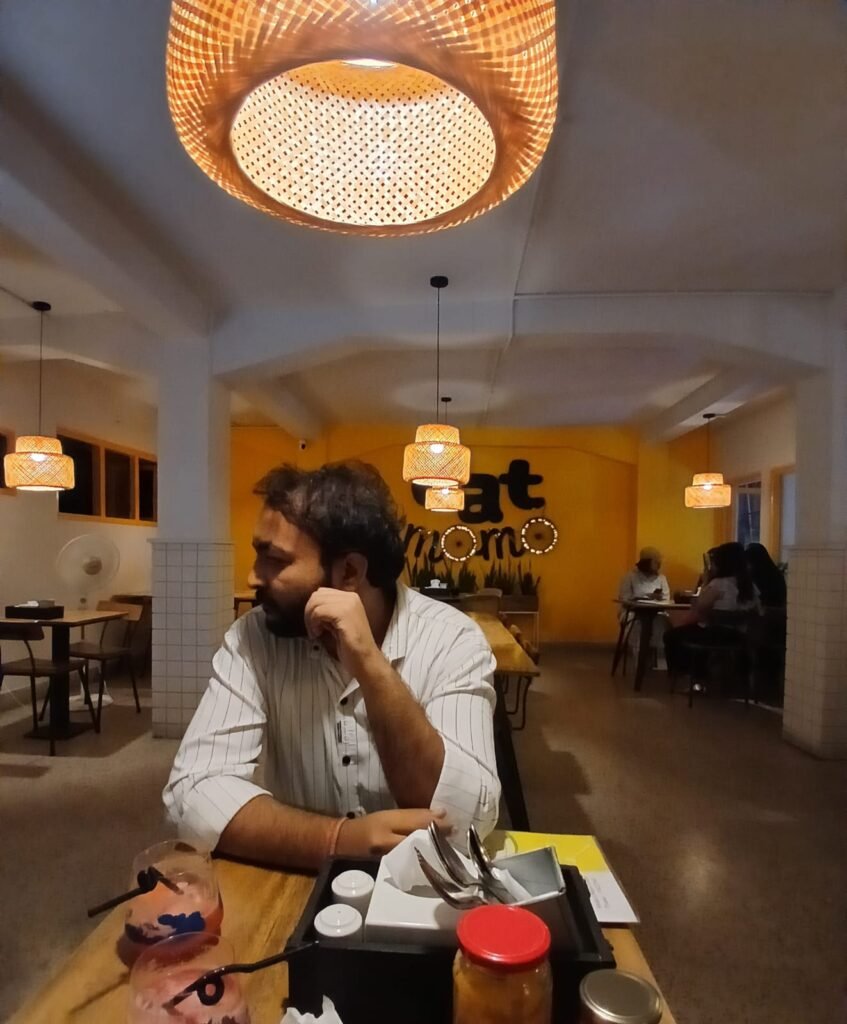
The café where we relaxed.
The market where we looked for memories.
The bus ride home.
Those moments turned a normal holiday into a real travel story.
And that’s exactly how I would want to travel through Nepal again.
Also See related Artcle India to Nepal by Bus (2026): My Completely Unplanned 7-Day Trip from Delhi to Kathmandu & Pokhara, Our Nepal Trip From India: A Real Travel Story, From the Journey to the People We Met, Nepal Trip Budget From India: My Real Travel Experience and Total Expenditure, Pumdikot Pokhara by Scooter: Our Real Mountain Ride, Giant Shiva Statue & Unexpected Adventure, Paatal Lok Nepal Travel Experience (2026): My Adventurous Cave & Waterfall Experience