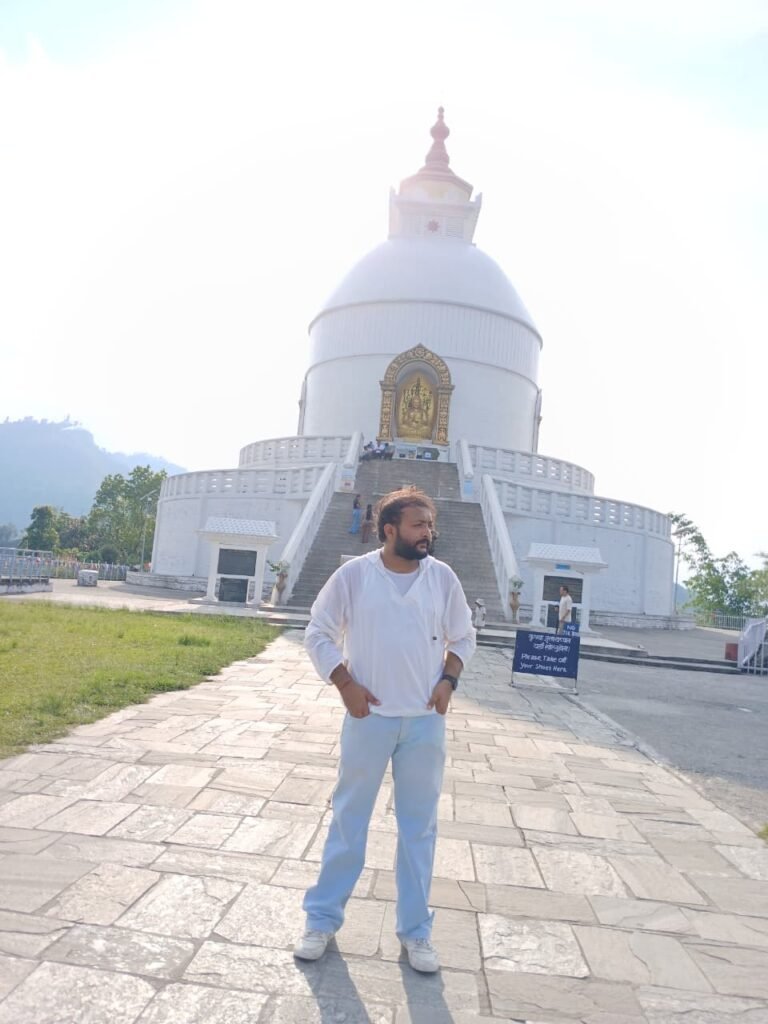
Nepal Travel Experience: What I Loved, What Challenged Me & What I Would Do Differently
Our Nepal trip wasn’t a perfectly planned holiday.
There was no situation where we had every minute of every day decided in advance. A lot of the trip happened naturally. We reached a place, explored it, spoke to people, asked for suggestions and then decided what to do next.
And honestly, that became one of the best things about the trip.
Because when you travel like that, you don’t just collect photographs of famous places. You experience the small things too—the crowded buses, negotiating for transport, finding hotels, riding a scooter through the mountains, sitting beside a lake, getting nervous inside a narrow cave and talking to complete strangers.
After coming back, I realized that my Nepal trip had a very interesting mix of beautiful experiences, unexpected adventures, small inconveniences and a lot of learning.
So instead of making this another generic list of places to visit in Nepal, I wanted to look back at the trip honestly.
What did I actually like?
What was difficult?
What surprised me?
And if I went again, what would I do differently?
Our Nepal Trip Was More About Experience Than Planning
The biggest thing about our trip was that we didn’t follow a rigid plan.
We had an idea of the places we wanted to explore, but once we were there, things kept changing.
Sometimes another traveller recommended a place.
Sometimes we found a location while travelling.
Sometimes the weather changed our plans.
And sometimes we simply liked a place and wanted to spend more time there.
Pokhara was a perfect example.
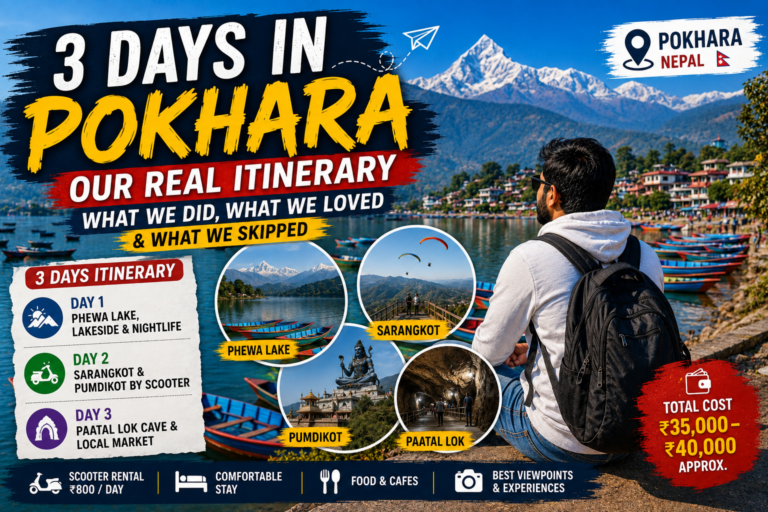
We initially expected to spend less time there, but after experiencing the city, the lake, the surrounding mountains and the overall atmosphere, we ended up spending around three days there.
That flexibility made the trip feel much more natural.
My Overall Analysis of the Nepal Experience
Looking back, I’d divide our experience into a few major areas.
| Experience | My Take | Why |
|---|---|---|
| Natural scenery | ⭐⭐⭐⭐⭐ | Mountains, hills, Phewa Lake and surrounding landscapes were the highlights |
| Adventure | ⭐⭐⭐⭐⭐ | Paatal Lok and mountain scooter rides gave us genuine adventure |
| People | ⭐⭐⭐⭐⭐ | We repeatedly received help and interacted with locals and travellers |
| Cleanliness | ⭐⭐⭐⭐½ | The cleanliness and people’s civic sense impressed me |
| Transport | ⭐⭐⭐½ | Useful but sometimes crowded, variable and dependent on negotiation |
| Accommodation | ⭐⭐⭐⭐ | We found reasonably priced hotels, although we had a booking issue |
| Food & cafés | ⭐⭐⭐⭐ | Cafés and simple meals became part of the experience |
| Nightlife | ⭐⭐⭐⭐ | Lakeside and the club experience gave Pokhara another side |
| Value for money | ⭐⭐⭐⭐½ | Our overall trip cost around ₹35,000–₹40,000 |
| Overall experience | ⭐⭐⭐⭐⭐ | The combination of people, places and unexpected moments made it memorable |
These ratings are my personal assessment of our experience, not an objective ranking of Nepal.
What I Loved Most About Nepal
1. The Mountains Were Obviously a Highlight
You can’t really travel around Nepal and ignore the mountains.
Even when we weren’t visiting a specific viewpoint, the landscape itself was part of the experience.
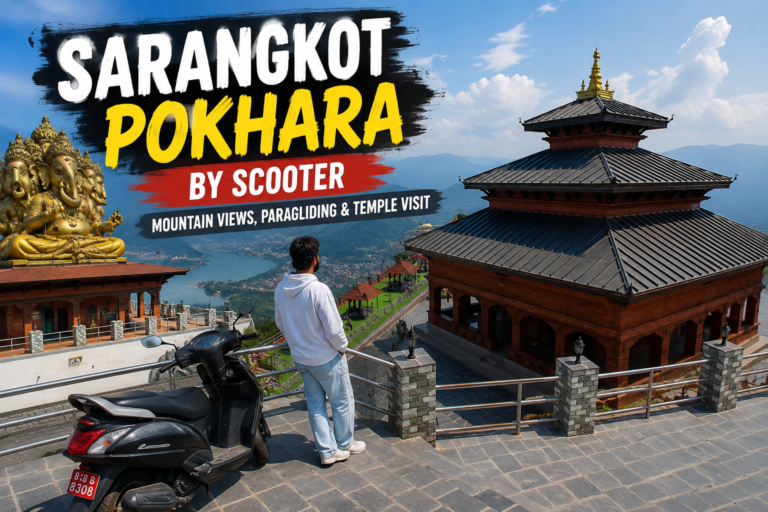
The roads around Sarangkot and Pumdikot were especially memorable because we were riding a scooter through the hills.
Instead of simply arriving at a viewpoint in a vehicle, we experienced the road ourselves.
There were turns.
There were climbs.
There were changing views.
And there was the feeling that we didn’t know exactly what we’d see around the next corner.
That’s one of the reasons I enjoy travelling by scooter.
The journey becomes part of the destination.
2. Pokhara Was My Favourite Part
If I had to choose one place from our Nepal trip that I connected with the most, it would probably be Pokhara.
There was something about the combination of the lake, mountains and relaxed atmosphere.
We spent time around Phewa Lake and Lakeside.
We explored cafés.
We experienced live singing.
We walked around the area.
And later, we even experienced the nightlife.
Pokhara didn’t feel like a place where you constantly had to rush from one attraction to another.
You could simply sit somewhere and enjoy the surroundings.
That suited our style of travelling perfectly.
3. Paatal Lok Was the Biggest Adventure
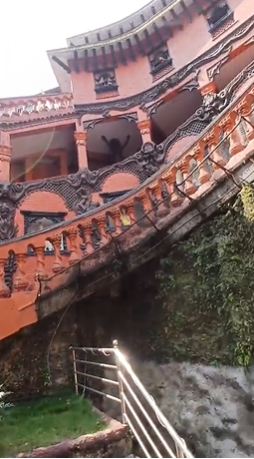
Paatal Lok was completely different from the peaceful experience of Lakeside.
We went inside expecting an interesting cave experience.
What we got was something much more adventurous.
The entry ticket was around ₹100 per person during our visit.
We first went down through the spiral staircase.
The stairs kept going lower and lower, giving us the feeling that we were actually going underground.
Then the caves started.
And that’s when things became intense.
The Cave Was Extremely Narrow
I’m around 5’10”, and in some sections I had to bend down because the ceiling was too low.
There were a lot of people inside.
Some passages were so narrow that only one person could comfortably move through them.
In other places, two people could barely pass each other.
Water was also dripping from above.
We were already sweating because of the crowd and heat, and then the water drops were making us wet too.
It wasn’t exactly comfortable.
But it was definitely memorable.
The Fear Was Real
I enjoyed the adventure, but I also had a genuine fear inside the cave.
There were so many people and the passages were so narrow that I kept thinking:
“If something happens here, how are we going to get out?”
That thought stayed in my mind.
At the same time, curiosity kept pushing us forward.
We wanted to know what was further inside.
Eventually, we reached areas with religious statues and a Shiva shrine, and later the waterfall section.
That combination of adventure and spirituality made Paatal Lok one of the most unusual experiences of our trip.
4. The People Made a Big Difference
One thing I repeatedly appreciated was how much we relied on other people during the journey.
We didn’t know every route.
We didn’t know every transport option.
We didn’t know every local place.
So we asked.
And people helped us.
Sometimes it was a local person.
Sometimes it was another traveller.
Sometimes it was someone sitting beside us on a bus.
Even during our return journey to Delhi, we spoke to people around us and took their help in understanding the route.
Those interactions made the trip feel more human.
5. Cleanliness Surprised Me
This was probably one of my strongest observations.
In several places we visited, I noticed a good level of cleanliness.
What impressed me wasn’t simply that streets appeared clean.
It was the behaviour of people.
I noticed people using dustbins and taking some responsibility for keeping their surroundings clean.
That made me think about something bigger.
A city’s development isn’t only about how many buildings or roads it has.
The behaviour of the people living there matters too.
If people themselves develop the habit of keeping public spaces clean, the entire city benefits.
That sense of self-discipline was something I genuinely appreciated during our trip.
6. Travelling as an Indian Was Convenient in Several Ways
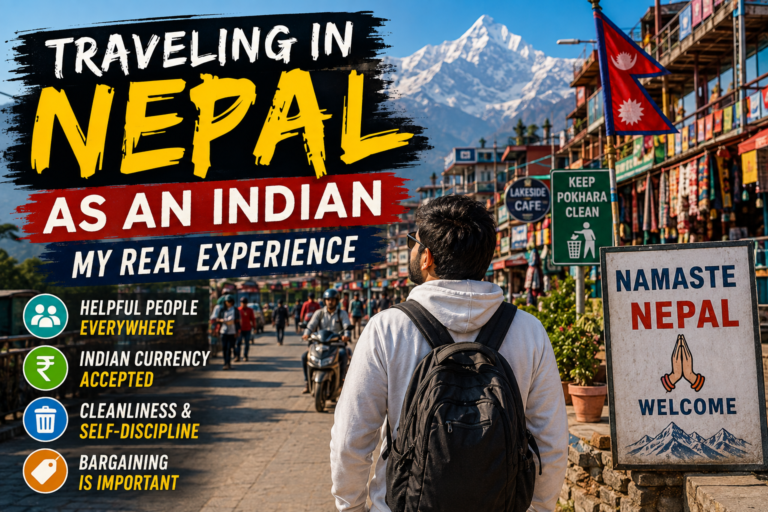
As Indian travellers, we found Nepal relatively comfortable to navigate.
There were cultural similarities.
Communication was manageable.
We also met other Indian travellers in tourist areas.
Another practical convenience during our experience was the use of Indian currency.
That made some everyday transactions easier for us.
I’d still recommend checking the current currency situation before travelling, because payment practices and rules can change.
But based on our own experience, this was convenient.
What Wasn’t So Easy?
A real travel article shouldn’t only talk about beautiful moments.
There were definitely things that made the trip more difficult.
And honestly, those experiences are just as useful for someone planning their own journey.
1. Transport Could Be Complicated
City-to-city travel wasn’t always straightforward.
Prices could vary depending on distance and negotiation.
Sometimes we had to ask multiple people to understand the route or figure out the best option.
This wasn’t necessarily a major problem, but it did require patience.
If you’re travelling independently, you can’t always expect everything to work exactly like a fixed tour package.
You have to ask questions.
You have to negotiate.
And sometimes you simply have to wait.
2. The Weather Changed Our Plans
Weather was another challenge.
During our time around Pokhara, particularly in the mountain areas, the weather wasn’t always clear.
At one point, we wanted to explore further towards Pokhara’s surrounding areas, but the weather wasn’t good enough.
Visibility was affected.
We had also hoped to see clearer mountain views around Sarangkot.
But mountains have their own rules.
You can plan the trip.
You can travel to the viewpoint.
But you can’t tell the clouds to move away.
So sometimes you have to accept that you won’t get the perfect view.
3. Our Hotel Booking Didn’t Go Exactly as Planned
We also had an accommodation issue.
We had booked a hotel online, but when we arrived, the room we had booked wasn’t available because of a booking-related problem.
We specifically wanted a room with a view.
Fortunately, the hotel owner helped us arrange another room nearby.
So it wasn’t a disaster.
But it was a reminder that online bookings don’t always go exactly according to plan.
It’s good to have a little flexibility when travelling.
4. Bargaining Was Necessary
Another thing we learned was that negotiation matters.
Transport prices could vary, and we noticed that the final price could depend on the distance and negotiation.
So we learned not to automatically accept the first price.
We would ask.
We would negotiate politely.
And then we’d decide.
It’s a small thing, but if you’re travelling for several days, these small differences can add up.
What Would I Do Differently Next Time?
This is probably the most useful part of looking back at a trip.
If I went back to Nepal, I wouldn’t completely change our travel style.
I actually liked the flexibility.
But I would make a few improvements.
| Area | What We Did | What I’d Do Next Time |
|---|---|---|
| Planning | Mostly flexible and spontaneous | Keep flexibility but plan key transport and hotels earlier |
| Weather | Adjusted plans when weather changed | Keep backup places for bad-weather days |
| Transport | Asked around and negotiated | Compare options before agreeing on a price |
| Hotels | Booked online | Confirm the booking directly before arrival |
| Pokhara | Explored several places | Give Pokhara even more time |
| Mountain views | Visited despite uncertain weather | Prefer clearer-weather days for viewpoints |
| Paatal Lok | Entered during heavy crowds | Visit when it is less crowded if possible |
| Shopping | Explored local markets | Keep more time for souvenir shopping |
| Itinerary | Mostly spontaneous | Keep the same freedom but have a basic route prepared |
The point isn’t that our way was wrong.
It worked for us.
I’d simply make it slightly more organized without losing the spontaneity.
What I Would Not Change
There are also things I would absolutely do the same way.
I Would Still Rent a Scooter
The scooter gave us freedom around Pokhara.
We could explore Sarangkot and Pumdikot ourselves.
We could stop for photographs.
We could change our route.
That independence was worth it.
I Would Still Talk to Locals
Some of the best information came from people we met.
No travel website can completely replace asking someone who is actually there.
I Would Still Leave Empty Space in the Itinerary
This is important.
I don’t want to turn our next Nepal trip into a checklist.
Some of the best memories came from things we hadn’t planned.
Was the Trip Worth the ₹35,000–₹40,000?
For me, absolutely.
Our overall expenditure was approximately ₹35,000–₹40,000.
That included the different expenses throughout our journey.
Some individual costs were:
- Scooter rental: around ₹800 for the day
- Paatal Lok entry: around ₹100 per person
- Hotels, food, transport and other expenses: included in our overall trip expenditure
I wouldn’t tell another traveller that they will definitely spend ₹35,000–₹40,000.
Your trip will depend on your route, number of days, accommodation, food and activities.
But as a reference point, that’s what our real trip cost us approximately.
My Nepal Experience: The Good and the Difficult
If I had to summarize the entire experience honestly, I’d put it like this:
The best parts
Mountains: Incredible scenery and memorable scooter rides.
Pokhara: My favourite overall atmosphere.
Paatal Lok: The most adventurous experience.
People: Helpful and approachable during many situations.
Cleanliness: Something that genuinely impressed me.
Flexibility: Our unplanned style allowed us to discover places naturally.
The challenging parts
Crowds: Particularly inside Paatal Lok.
Narrow caves: Physically uncomfortable and slightly frightening.
Weather: Sometimes prevented us from exploring further.
Transport: Required patience and negotiation.
Accommodation: One booking issue reminded us not to assume everything will be perfect.
The Biggest Lesson I Took From Nepal
If there’s one thing the trip taught me, it’s that travel isn’t supposed to be perfect.
We sometimes get this idea from Instagram and YouTube that every trip should look amazing.
Perfect hotel.
Perfect mountain view.
Perfect weather.
Perfect photographs.
Real travel isn’t like that.
Sometimes you’re sitting in a crowded bus.
Sometimes you’re sweating inside a cave.
Sometimes your hotel booking has a problem.
Sometimes the mountain disappears behind clouds.
Sometimes you don’t know which road to take.
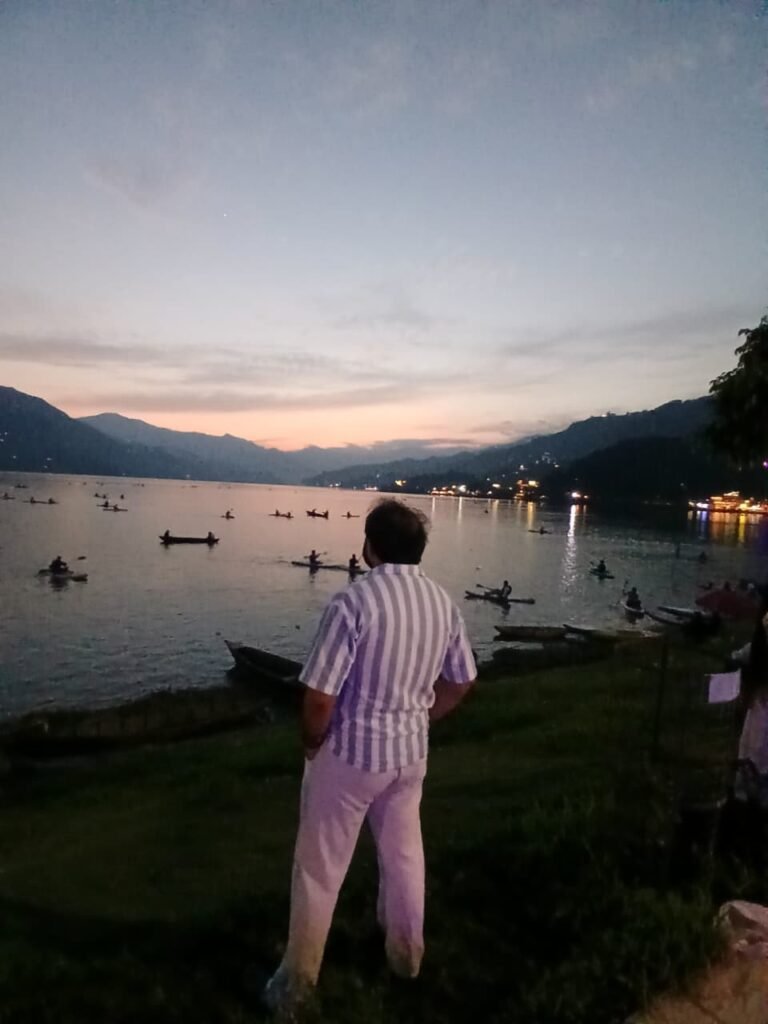
And sometimes you end up sitting beside a lake listening to music and thinking that everything is exactly right.
All of those moments are the trip.
Final Thoughts
When I look back at our Nepal journey, I don’t think of it simply as a list of destinations.
I think about how we travelled.
We asked people for help.
We negotiated.
We rode scooters through mountain roads.
We explored Sarangkot.
We visited Pumdikot.
We went deep inside Paatal Lok.
We spent time around Phewa Lake.
We explored Lakeside cafés and nightlife.
We dealt with changing weather.
We had a hotel booking issue.
And eventually, we took a long bus journey back to Delhi.
It wasn’t a perfect trip.
And that’s exactly why I remember it.
Our Nepal experience showed me that the best travel stories aren’t always created by perfect planning.
Sometimes they’re created by a wrong turn, a helpful stranger, an unexpected destination, a difficult road or a place you almost didn’t visit.
If I went back to Nepal, I’d plan a little better—but I wouldn’t plan everything.
I’d still leave room for the unexpected.
Because that’s where our best memories came from.
Nepal wasn’t just a country we visited. It became a journey we actually experienced.
Also see related article Pumdikot Pokhara by Scooter: Our Real Mountain Ride, Giant Shiva Statue & Unexpected Adventure, Sarangkot Pokhara by Scooter: My Real Experience, Mountain Roads, Views & Paragliding, India to Nepal by Bus (2026): My Completely Unplanned 7-Day Trip from Delhi to Kathmandu & Pokhara, Our Nepal Trip From India: A Real Travel Story, From the Journey to the People We Met, Best Beaches in Goa (2026): My Top 15 Beaches After Exploring North & South Goa