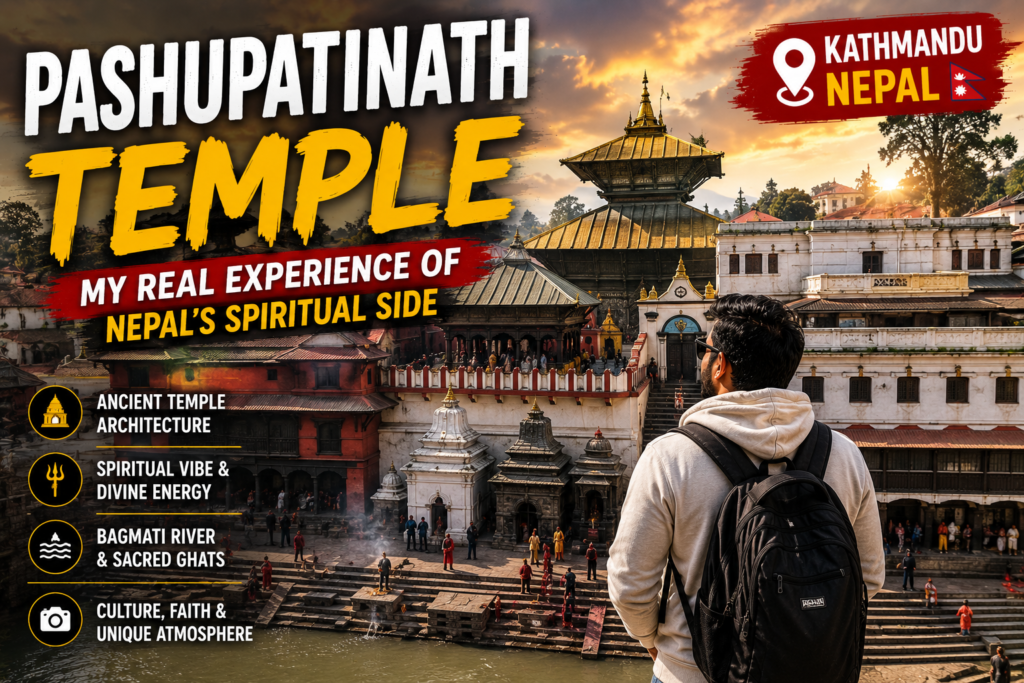
There was something completely different about visiting Pashupatinath Temple.
Until this point, our Nepal trip had been a mixture of mountains, scooter rides, lakes, caves, viewpoints, cafés and nightlife. We had already experienced the adventurous side of Nepal, especially around Pokhara.
But Pashupatinath felt different.
It wasn’t about adventure.
It wasn’t about taking the perfect photograph.
And it wasn’t simply another tourist attraction to tick off our list.
The moment we entered the area around Pashupatinath, the atmosphere felt more spiritual and serious. There was a completely different energy around the temple, the people, the architecture and the surrounding area.
For me, this became one of those places where you naturally slow down.
You look around.
You observe people.
You take in the surroundings.
And you realize that you’re experiencing something much deeper than ordinary sightseeing.
Pashupatinath at a Glance
| Experience | My Take |
|---|---|
| Destination | Pashupatinath Temple, Kathmandu |
| Type of place | Hindu temple and major religious site |
| Main attraction | Temple complex and spiritual atmosphere |
| Architecture | ⭐⭐⭐⭐⭐ |
| Spiritual vibe | ⭐⭐⭐⭐⭐ |
| Photography surroundings | ⭐⭐⭐⭐ |
| Overall atmosphere | ⭐⭐⭐⭐⭐ |
| Crowd experience | Busy but part of the experience |
| Cultural experience | ⭐⭐⭐⭐⭐ |
| My overall impression | ⭐⭐⭐⭐⭐ |
These ratings are based on my personal experience, not an official ranking.
Why Pashupatinath Felt Different From the Rest of Our Nepal Trip
Our Nepal trip had already taken us through several completely different experiences.
We had explored Pokhara.
We had spent time around Phewa Lake.
We had ridden scooters through the mountains.
We had visited Sarangkot and Pumdikot.
We had gone deep inside Paatal Lok.
We had experienced cafés and nightlife.
So naturally, I was expecting Pashupatinath to be another sightseeing stop.
But it didn’t feel like that.
There was a seriousness to the place.
People weren’t there only to take photographs.
Many people had come with genuine religious intentions.
There were devotees, visitors and tourists moving through the area, but the overall feeling remained strongly connected to faith.
That was what stood out to me.
The First Feeling When We Reached Pashupatinath
When you arrive at a famous tourist destination, you usually start thinking about photographs.
Where should I stand?
What’s the best angle?
What should I record?
But at Pashupatinath, my attention was drawn more towards the surroundings.
The temple architecture immediately caught my eye.
The traditional design, the detailed structures and the overall setting made it feel very different from modern tourist attractions.
It felt old.
It felt spiritual.
And it felt like a place with a history much larger than what you can understand during one short visit.
The Architecture Was One of My Favourite Parts
One of the things I appreciated most was the architecture.
The temple complex has a very distinctive traditional Nepali style.
The structures, roofs, details and surrounding elements all come together to create a very recognizable appearance.
Even if you’re not someone who normally spends much time looking at architecture, it’s difficult not to notice it here.
There is a sense of craftsmanship everywhere.
And because the surroundings are so different from the modern parts of Kathmandu, walking through the complex feels almost like stepping into another period.
It Didn’t Feel Like a Typical Tourist Attraction
This is probably the biggest difference I noticed.
At many tourist destinations, you immediately feel that the place has been designed around visitors.
You see people taking photographs.
You see shops.
You see guides.
You see people moving from one attraction to another.
Pashupatinath certainly has visitors and tourists, but the religious purpose remains very visible.
That changes the atmosphere.
You become more conscious of the fact that you’re visiting a place that is deeply important to many people.
And that makes the experience feel more meaningful.
The Spiritual Vibe Was the Real Highlight
If I had to describe my Pashupatinath experience in one word, I’d choose:
Spiritual.
There was something about the combination of the temple, people, rituals, traditional architecture and the overall environment.
It wasn’t loud in the way a busy tourist market is loud.
Even with people around, there was a different kind of energy.
You could feel that this wasn’t simply a place people came to see.
It was a place people came to believe, pray and connect with their faith.
That difference stayed with me.
The Bagmati River Adds Another Layer
The temple complex is situated alongside the Bagmati River, and the river adds another important dimension to the experience.
Standing around the riverside area gives you a very different perspective of Pashupatinath.
The temple isn’t isolated from its surroundings.
The river, ghats, temples and people are all connected.
It creates a scene that feels deeply rooted in Hindu traditions.
For someone visiting from India, there are also cultural elements that feel familiar.
But at the same time, the overall setting in Kathmandu gives the experience its own character.
Watching the Surroundings Was an Experience in Itself
One thing I learned at Pashupatinath was that you don’t always need to be doing something.
Sometimes you can simply observe.
People were moving around.
Devotees were coming and going.
The temple environment continued around us.
The river was nearby.
And the architecture remained in the background.
I found myself paying attention to these small details rather than trying to rush through the place.
That’s something I would recommend from my own experience:
Give yourself time to simply observe.
Pashupatinath Compared With Our Pokhara Experiences
The contrast was huge.
In Pokhara, we were constantly moving.
Scooter.
Mountain roads.
Sarangkot.
Pumdikot.
Paatal Lok.
Cafés.
Lakeside.
Nightlife.
There was always something happening.
Pashupatinath had a completely different pace.
It encouraged observation rather than movement.
It felt calmer mentally, even though there were people around.
That contrast actually made the Nepal trip more interesting.
My Personal Comparison
| Destination | Main Feeling | My Rating |
|---|---|---|
| Pashupatinath | Spiritual & cultural | ⭐⭐⭐⭐⭐ |
| Phewa Lake | Peaceful & relaxing | ⭐⭐⭐⭐⭐ |
| Sarangkot | Scenic & adventurous | ⭐⭐⭐⭐⭐ |
| Pumdikot | Spiritual + scenic | ⭐⭐⭐⭐½ |
| Paatal Lok | Adventurous & slightly scary | ⭐⭐⭐⭐⭐ |
| Lakeside at night | Relaxed + lively | ⭐⭐⭐⭐⭐ |
This isn’t a competition between destinations.
They simply gave us completely different experiences.
A Different Kind of Photography
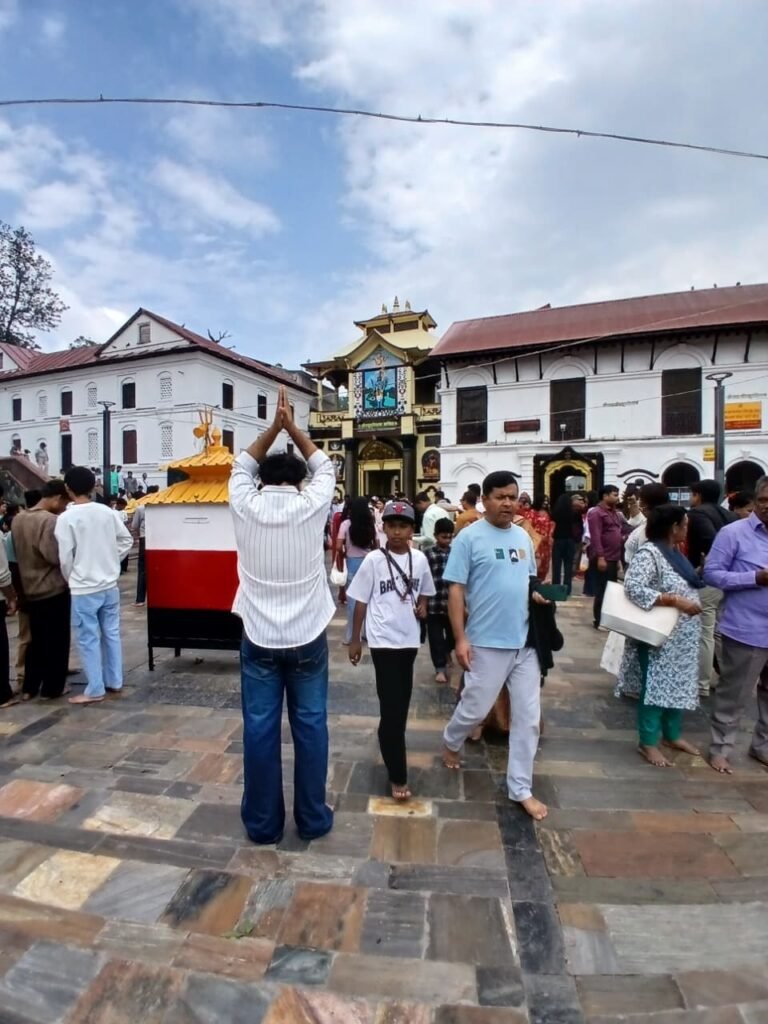
I also noticed that photography felt different here.
At Sarangkot or Pumdikot, you’re naturally looking for landscapes.
You want the mountain.
You want the sky.
You want yourself standing in front of the viewpoint.
At Pashupatinath, the surroundings themselves tell the story.
The architecture.
The temple roofs.
The courtyards.
The river.
The ghats.
The people.
The details.
So rather than trying to capture only one “perfect” photograph, I found the environment itself interesting.
The Traditional Nepalese Details
Another thing I liked was the traditional character of the area.
The architecture didn’t feel generic.
There were distinctive roofs, brickwork, carved details and religious structures.
These details are easy to miss if you’re rushing.
But when you slow down, you start noticing how much character the place has.
For me, that’s one of the reasons Pashupatinath works better as a destination experience than simply a quick photo stop.
The Crowd Is Part of the Experience
Of course, a famous religious site like Pashupatinath can be crowded.
There were plenty of people around.
But I didn’t see the crowd simply as a negative.
In a way, the crowd shows you how important the place is.
People aren’t travelling there only because it’s famous on the internet.
They’re coming because it matters to them.
That makes the experience different from visiting an ordinary monument.
Visiting a Religious Place Requires a Different Mindset
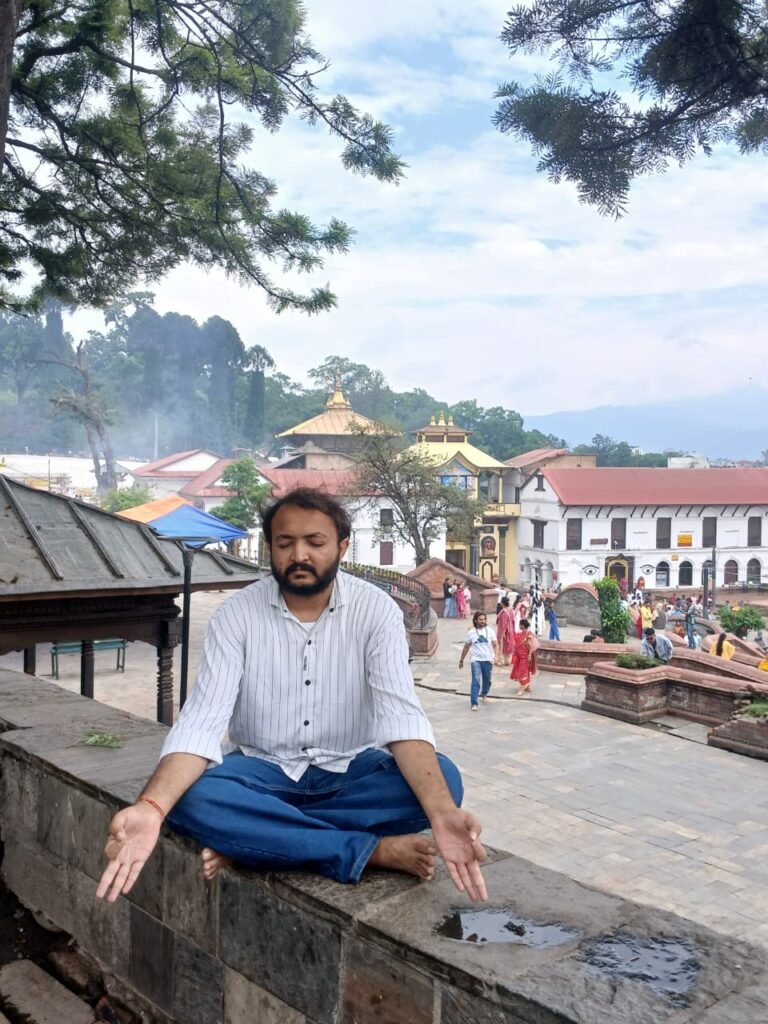
This was something I became more conscious of while visiting.
When you’re at a normal tourist attraction, you can move around freely, take photographs and treat the entire place as sightseeing.
At a religious site, you need to be more respectful.
People may be praying.
There may be rituals taking place.
There may be areas where photography isn’t appropriate or isn’t permitted.
So my approach was simply to observe and respect the environment.
The goal isn’t to turn everything into content.
Sometimes you have to experience the moment first.
What I Enjoyed Most About Pashupatinath
If I had to choose the strongest parts of my experience, I’d put them in this order.
1. The Spiritual Atmosphere
This was easily the biggest highlight.
2. The Architecture
The traditional design made the place visually impressive.
3. The Bagmati River Setting
The river and surrounding ghats added depth to the experience.
4. The Cultural Experience
It gave us a different perspective on Nepal beyond mountains and adventure.
5. The Feeling of History
The entire area felt connected to a much older tradition.
What Surprised Me
What surprised me most was how different the experience felt from the rest of our trip.
Before visiting, I expected:
“We’ll visit the temple, take some photographs and leave.”
But it wasn’t that simple.
The place made me slow down.
It made me observe.
And it made me think about how travel isn’t always about entertainment.
Sometimes the most memorable places are the ones that make you stop and absorb the atmosphere.
Pashupatinath Was an Important Part of Our Nepal Story
If you look at our Nepal trip as a whole, we experienced several sides of the country.
Adventure
Paatal Lok and mountain scooter rides.
Nature
Phewa Lake and mountain landscapes.
Viewpoints
Sarangkot and Pumdikot.
Food
Cafés, momos and local experiences.
Nightlife
Our evening around Lakeside.
Culture and spirituality
Pashupatinath and the religious sites we visited.
That’s why I think Pashupatinath was important.
It added another layer to the trip.
Without it, our Nepal story would have been heavily focused on adventure and scenery.
Pashupatinath brought us back to the cultural and spiritual side of Nepal.
How I Would Describe the Vibe
If someone asked me:
“What does Pashupatinath feel like?”
I’d struggle to describe it in one sentence.
It’s peaceful in some moments.
Busy in others.
Spiritual.
Traditional.
Historic.
Emotional.
And very alive.
It’s not polished in the way some modern tourist attractions are.
And I think that’s part of its character.
You don’t visit Pashupatinath just to see a beautiful building.
You visit to experience the environment around it.
Pashupatinath vs a Normal Temple Visit
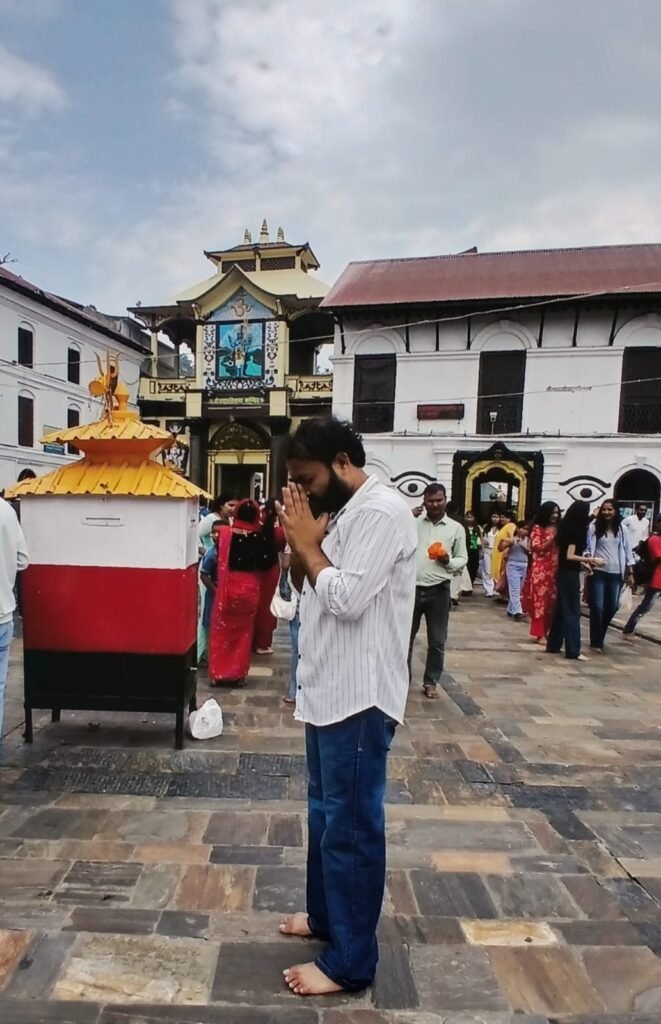
For me, the difference was the scale of the experience.
A normal temple visit can be relatively simple.
You enter.
You pray.
You look around.
You leave.
Pashupatinath felt more like a whole cultural environment.
The temple complex, river, surrounding shrines, architecture, people and rituals all formed one experience.
That’s what made it memorable.
My Personal Analysis of the Destination
| Category | My Rating | Why |
|---|---|---|
| Spiritual atmosphere | ⭐⭐⭐⭐⭐ | Strongest part of the experience |
| Architecture | ⭐⭐⭐⭐⭐ | Distinctive and beautiful |
| Cultural value | ⭐⭐⭐⭐⭐ | Very different from ordinary sightseeing |
| Photography | ⭐⭐⭐⭐ | Lots of visual details |
| Relaxation | ⭐⭐⭐⭐ | Depends on crowd and timing |
| Adventure | ⭐⭐ | Not the reason to visit |
| Historical feeling | ⭐⭐⭐⭐⭐ | Strong sense of tradition |
| Overall experience | ⭐⭐⭐⭐⭐ | One of the important parts of our Nepal trip |
Things I Would Keep in Mind
Based on my experience, I’d keep a few simple things in mind when visiting Pashupatinath.
Don’t rush.
Give yourself enough time to take in the surroundings.
Dress respectfully.
You’re visiting an important religious site.
Respect people praying.
Not everything needs to become a photograph.
Be aware of photography restrictions.
Some areas may have rules, so follow the signs and local instructions.
Expect people.
It’s a major religious destination, so don’t expect complete quiet.
And most importantly:
Visit with an open mind.
Even if you’re primarily interested in travel and photography, the cultural side is what makes Pashupatinath special.
Was Pashupatinath Worth Visiting?
For me, absolutely.
If you’re visiting Kathmandu, I think Pashupatinath deserves a place in your itinerary.
Not because you need another famous tourist attraction.
But because it gives you something different.
If your Nepal trip is mostly mountains and adventure, Pashupatinath gives you spirituality.
If you’ve been spending your evenings in cafés and nightlife, Pashupatinath gives you a completely different atmosphere.
If you’ve been travelling quickly from one attraction to another, it gives you a reason to slow down.
And if you’re interested in understanding Nepal beyond its scenery, this is one of the places that helps you do that.
Final Thoughts
Looking back at our Nepal journey, Pashupatinath stands out for a completely different reason than places like Sarangkot or Paatal Lok.
Sarangkot gave us the mountains.
Pumdikot gave us the giant Shiva statue and the viewpoint.
Paatal Lok gave us adventure, narrow caves and a little bit of fear.
Phewa Lake gave us peace.
Lakeside gave us cafés and nightlife.
But Pashupatinath gave us the spiritual side of Nepal.
The temple architecture.
The Bagmati River.
The people.
The religious atmosphere.
The traditional surroundings.
And that feeling that you are standing somewhere that means much more to people than simply being a tourist attraction.
For me, that’s what made the visit memorable.
It wasn’t about how many photographs we took.
It wasn’t about how quickly we could see everything.
It was about standing there, looking around and taking in the atmosphere.
And after experiencing so much adventure during our Nepal trip, that slower, more spiritual experience was actually something I appreciated.
Pashupatinath wasn’t just another place we visited in Kathmandu. It was one of the places that helped me understand a different side of Nepal.
Also see related article Pumdikot Pokhara by Scooter: Our Real Mountain Ride, Giant Shiva Statue & Unexpected Adventure, India to Nepal by Bus (2026): My Completely Unplanned 7-Day Trip from Delhi to Kathmandu & Pokhara, Sarangkot Pokhara by Scooter: My Real Experience, Mountain Roads, Views & Paragliding, Pumdikot, Pokhara: Our Real Experience at the Giant Shiva Statue & Mountain Viewpoint, Paatal Lok Nepal Travel Experience (2026): My Adventurous Cave & Waterfall Experience